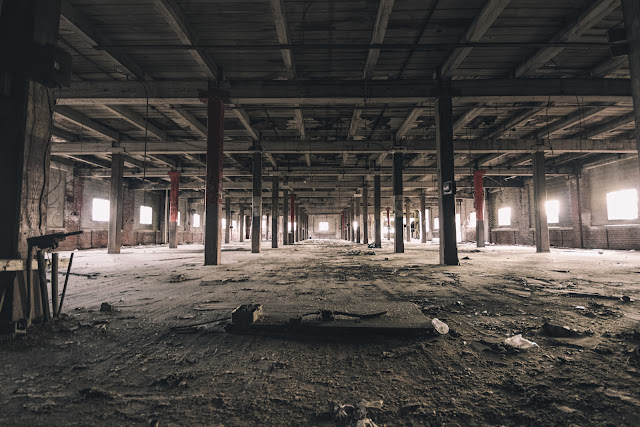
 |
| Interior Shot |
Update: February 29, 2024
**The journey of uncovering the stories behind historical sites is often fraught with twists and complexities. It's a path that demands diligence and an unwavering commitment to accuracy. In the pursuit of documenting the remnants of industrial heritage, a recent endeavor led to an unexpected realization: an image previously attributed to the interior of the Steele Heddle Manufacturing Complex was, in fact, misidentified.
After an exhaustive review of various Philadelphia surveys and a meticulous comparative analysis, it has been determined that the actual location depicted is the Steel (Steal) Units Manufacturing Company. This significant oversight highlights the challenges inherent in historical research and urban exploration. The Steele Heddle Manufacturing, a separate entity, is located a mere street away, along W Allegheny Ave, further complicating the initial identification process.
I extend my sincerest apologies for this confusion and the delay in addressing the comments that pointed towards this discrepancy. The commitment to rectifying this mistake is not just about correcting a factual error; it's an acknowledgment of the responsibility we bear in preserving and accurately representing the narratives of our past.
This experience serves as a poignant reminder of the importance of rigorous verification in historical documentation. It's a call to approach such endeavors with both passion and precision, ensuring that each piece of history we seek to preserve is done so with the utmost fidelity. As we move forward, this episode reinforces our dedication to uncovering and sharing the true stories of our architectural and industrial heritage, with a renewed commitment to accuracy and transparency.
Last week news broke of fire engulfing the 332,600-square-foot city block North Philly factory. I explored this factory late last year. Inside consisted of huge wooden open space floors with no machinery or other placeholders located inside. Of course, this provided the fuel that lasted three hours as firefighters fought to contain this massive fire destruction.
The Steel Heddle Manufacturing Company manufactured textile loom accessories. The Philadelphia plant remained in operation until 1983 and in 2007 sold for $1 to AM8 Group Steel Heddle. To my surprise, I only took one picture here (no video as well) after entering the basement and exploring the other three floors. It was an uninteresting place except for another building down the street that piqued my interest.
Destroyed & Demolished May 18, 2018


Comments
Post a Comment