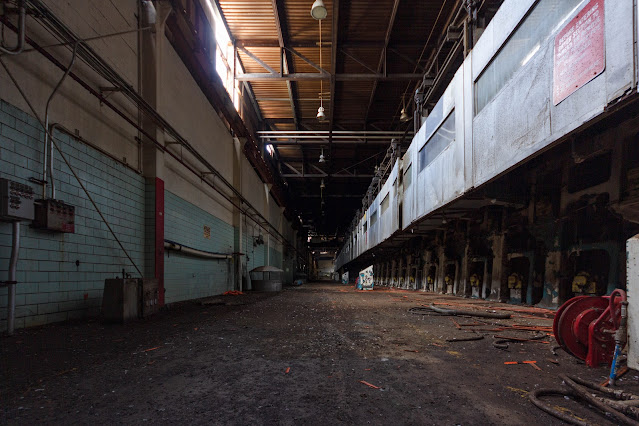
The historic Chestnut Street factory, once a bustling hub of industry in Norwich, Connecticut, has traversed a remarkable journey through time, reflecting the city's industrial revolution and its current quest for revitalization. Established in 1885 as the Beer Bottling Works, this site remained active in various capacities until its eventual demolition in 2015.
Initially, the factory played a pivotal role in Norwich's burgeoning beer industry. By 1897, it had expanded its operations to include Carpet Cleaning and Beer Bottling Works, showcasing the diverse industrial activities of the era. The early 20th century saw further diversification with D.M. Wilson's Steam Carpet Cleaning & Dye Works in 1903, followed by the establishment of the Norwich Nickel & Brass Company and the Pequot Brass Foundry in 1914. The J.B. Martin Company, known for manufacturing silk velvet, took over in 1926, and finally, the Norwich Paper Box Company occupied the space from 1949 until the mid-20th century.
This site featured two main structures: a three-story front building constructed in 1895 and a two-story rear building from the early 1900s. By November 2011, the City of Norwich acquired the 28,380-square-foot property through a tax sale, marking a new chapter in its history.
The decision to demolish the factory in 2015 was driven by the need to protect against injury by trespassers and its crumbling exterior brick walls to the public, costs were estimated between $249,000 and $834,000 in 2013. This demolition was part of a broader vision by the Norwich Development Agency, which aimed to revitalize the area by integrating it with the nearby 2.53-acre Hopkins & Allen Fire Arms Company Mill complex. This ambitious project promised to create 197 jobs through a mixed-use development, combining retail, office, and residential spaces.
Despite these grand plans, the site remains undeveloped, a testament to the challenges of urban renewal. The former mill properties, zoned in the Chelsea Central District, offer a flexible framework for potential uses, including retail, offices, restaurants, museums, theaters, and schools, with possibilities for multifamily residential units, hotels, and transportation centers under special permits.
Yet, the lack of developer interest in this prime location, within walking distance of City Hall and Main Street, highlights the complexities of reimagining historical industrial sites. The story of the Chestnut Street factory is not just about the rise and fall of industries but also about the potential and pitfalls of urban redevelopment in preserving the legacy of the past while striving for a revitalized future.
🍺
More Connecticut Industrial History
🍺 Did You Work at the Norwich Beer Bottling Works?
Were you employed here during any of its many incarnations—Beer Bottling Works, Norwich Nickel & Brass, J.B. Martin Silk Velvet, or Norwich Paper Box Company? Do you have photos from when the factory was still standing, or memories of this Chestnut Street landmark before its 2015 demolition? Share your stories below.
Drop a comment below or contact me directly. Full credit given to all contributors.
Sources:
1. Benson, A. (2013, December 12). (Norwich receives 6 bids to demolish Chestnut Street mil). Norwich Bulletin.
2. Benson, A. (2013, September 10). (Developer: Clean up Chestnut Street blight). Norwich Bulletin.
3. (n.b). Norwich Area-wide Brownfield Study


-20.jpg)



Comments
Post a Comment