The Vewer Avenue Tunnel

Image
Inside Manhattan's Graffiti Tunnel It started the way most things do these days: with a phone in my hand and nowhere particular to be. I was scrolling through the usual digital noise when a video stopped me cold. A crowd of people spilling into a tunnel, its walls erupting in color so dense and layered it looked less like concrete and more like the inside of someone's fever dream. Tags, murals, massive bubble letters stacked ceiling-high. My thumb hovered. I watched it again. That was the Park Avenue Tunnel, buried under one of Manhattan's most recognizable thoroughfares. And from what I could gather online, it had become something of an open secret, a once-busy vehicle artery turned accidental gallery. Legendary names were showing up on those walls. Local favorites, too. I'd heard of mob bombs before, those spontaneous, loosely coordinated art invasions where writers descend on a space and leave it permanently changed. But this felt different. This felt like a fa...

Brooklyn Graffiti Skull Mural


No pirate treasure here but I did find some rope to hang myself.


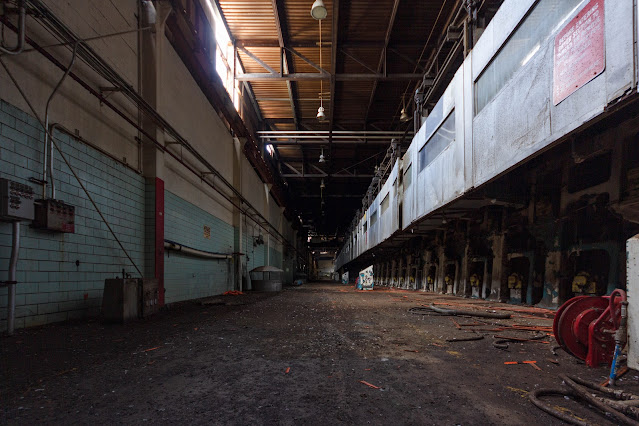
This remnant of a much larger complex that burned in 2006 was once home to American Manufacturing Company. It was built in 1890 and manufactured 10 million pounds of oakum used in caulking wooden ship seams. Employing over 2,000 workers who lived nearby in Greenpoint Brooklyn. Mainly female Polish and Lithuanian immigrant workers. American Manufacturing Company started off as a two-story jute mill quickly expanding from one block to six. In 1920, it became the largest hemp and jute factory in the manufacture of 400,000 pounds of cotton bagging and ties daily.


Later known as the forgotten Greenpoint Terminal Market. The historic warehouses burned in 2006 as it was revealed they were being referred to by The Municipal Art Society as historical landmarks to the Landmarks Preservation Commission. The Greenpoint fire was responded to by a large force of 350 firefighters on the day it burned. Now, a few remaining buildings that survived and were part of the complex have turned into residential buildings, and one outlier building is situated on the river. That building was all that remains until graffiti artist Greg Suits (Suitswon) placed that building on the map. Intrepid photographer Raphael Gonzalez saw it and his pictures went viral across news sites. Researching more about the building, the location was used in a Netflix series.


To learn more about the storied history of Greenpoint Terminal Market, you can read a well-written and in-depth piece by Bedford and Bowery, here.


To see the last vestiges of the market check out Nathan Kensinger's Flickr set.


Comments

Popular posts from this blog

Connecticut Telephone and Electrical Company

Diner Dreams and Declines: The Kullman Dining Car Company

Former Sonoco Paper Mill

John A. Roebling's Sons Company Upper Works

Exploring the Abandoned Aerosol Techniques Factory in Milford, CT (Photos)